

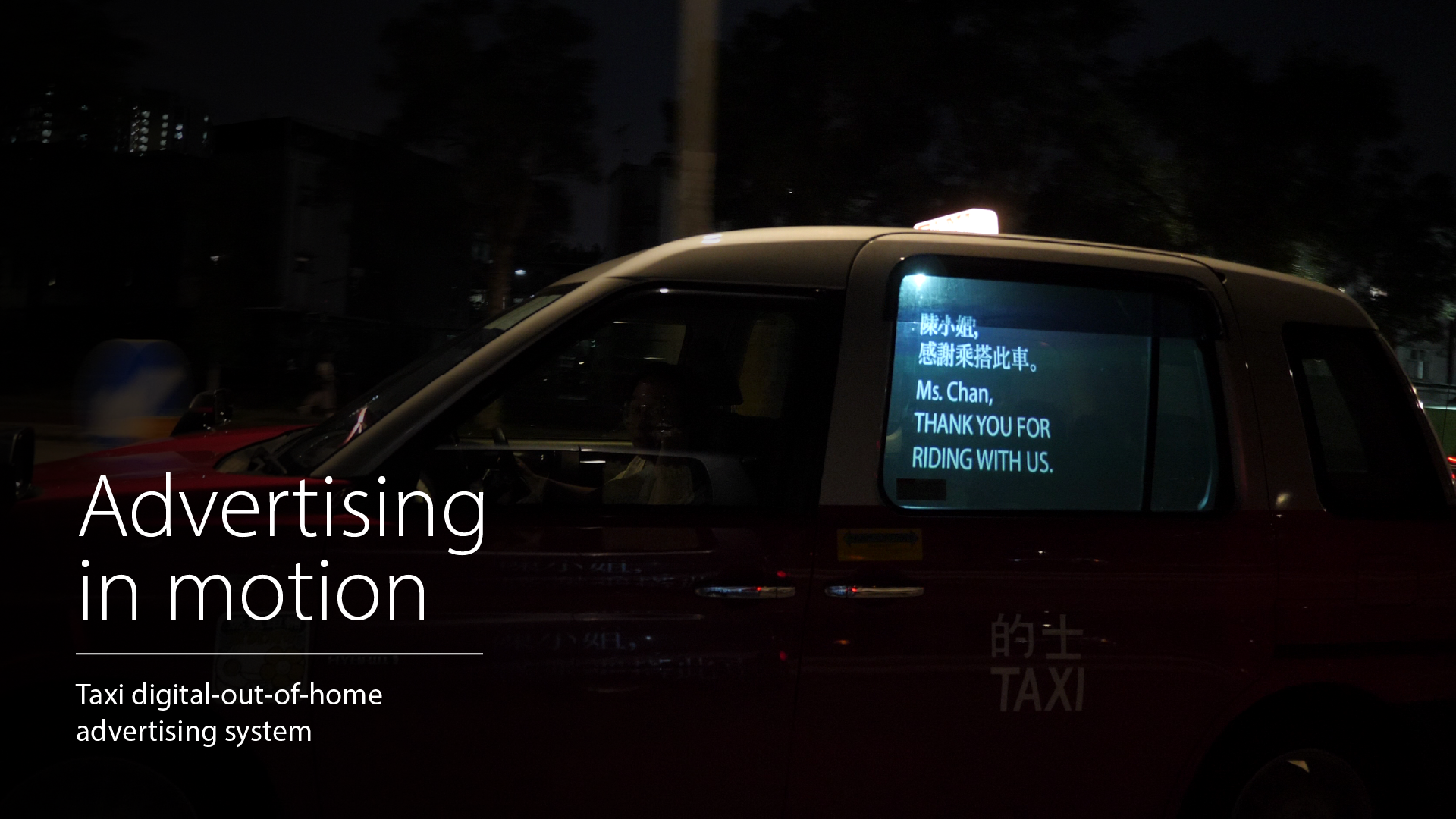
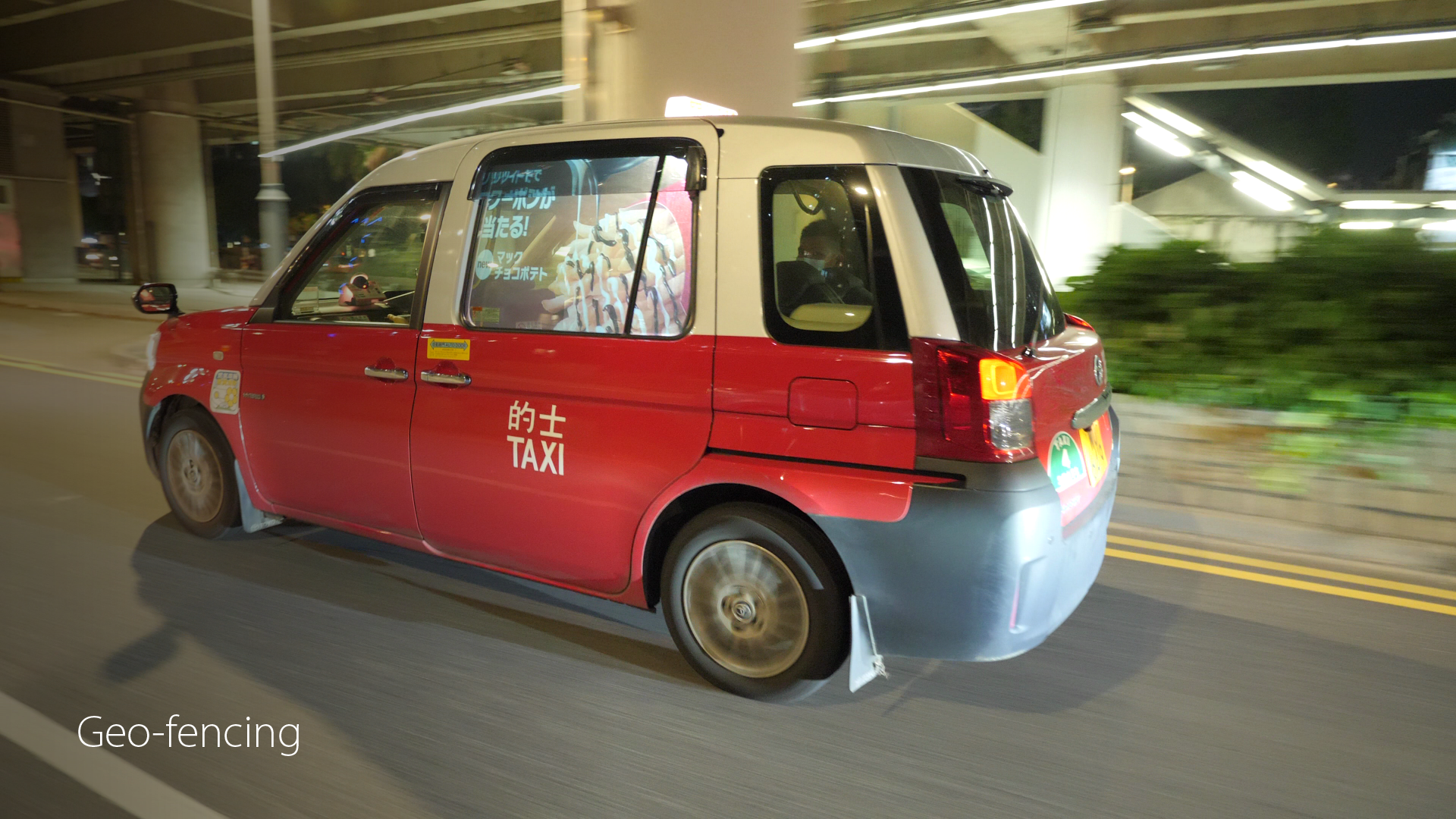
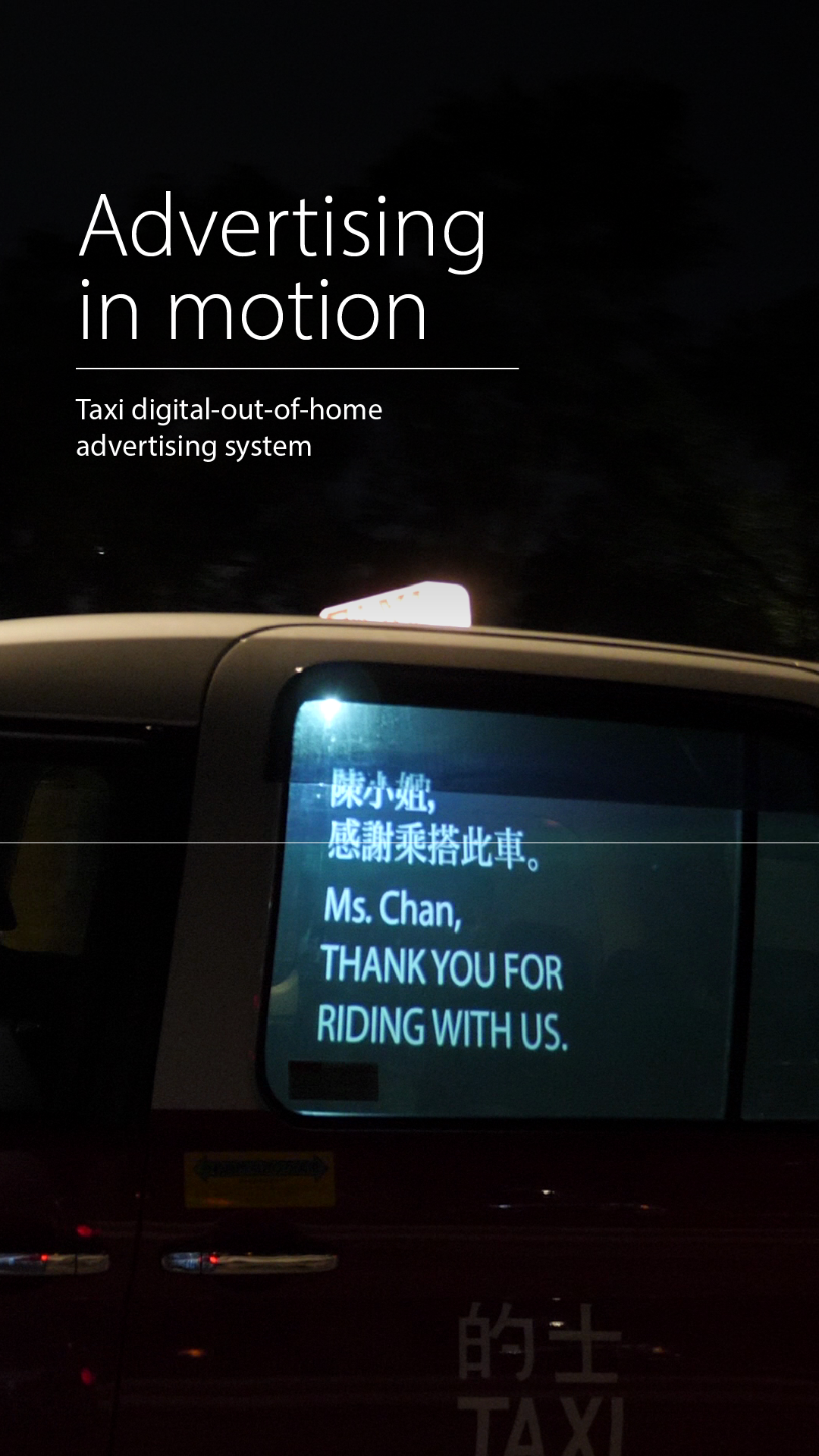

This self-initiated R&D project explored the unused passenger-side taxi window as a digital out-of-home advertising surface. Traditional taxi advertising normally carries one fixed campaign while the vehicle travels through unpredictable routes. The concept introduced a flexible media channel capable of changing content according to location, time, and vehicle status.
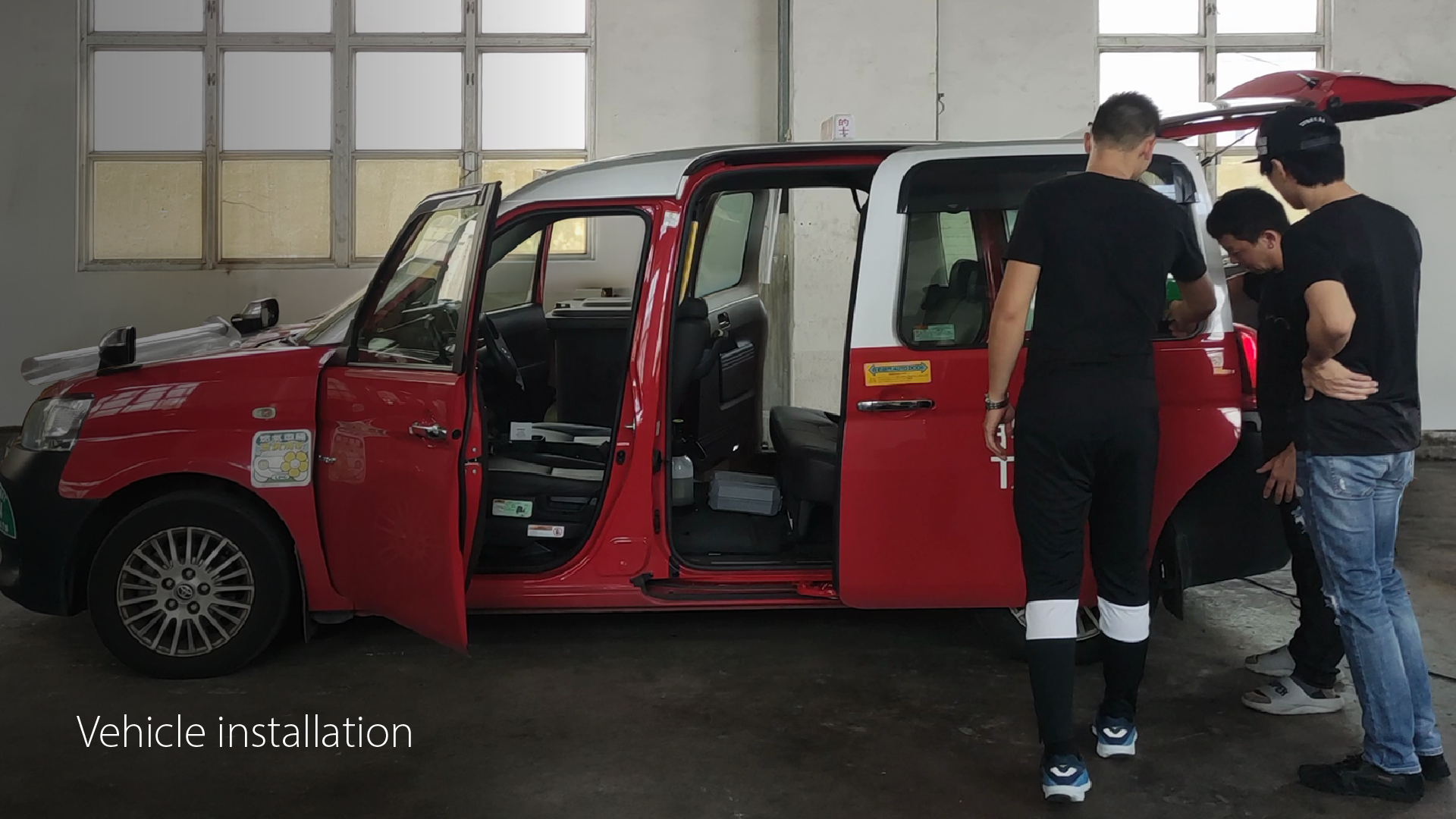
The system had to operate inside a moving taxi without affecting normal passenger service. Projection brightness, screen placement, vibration, limited interior space, vehicle power conversion, network connectivity, and passenger detection all required coordination. Content also needed to stop when the taxi was occupied or operating in locations where advertising should not be shown.
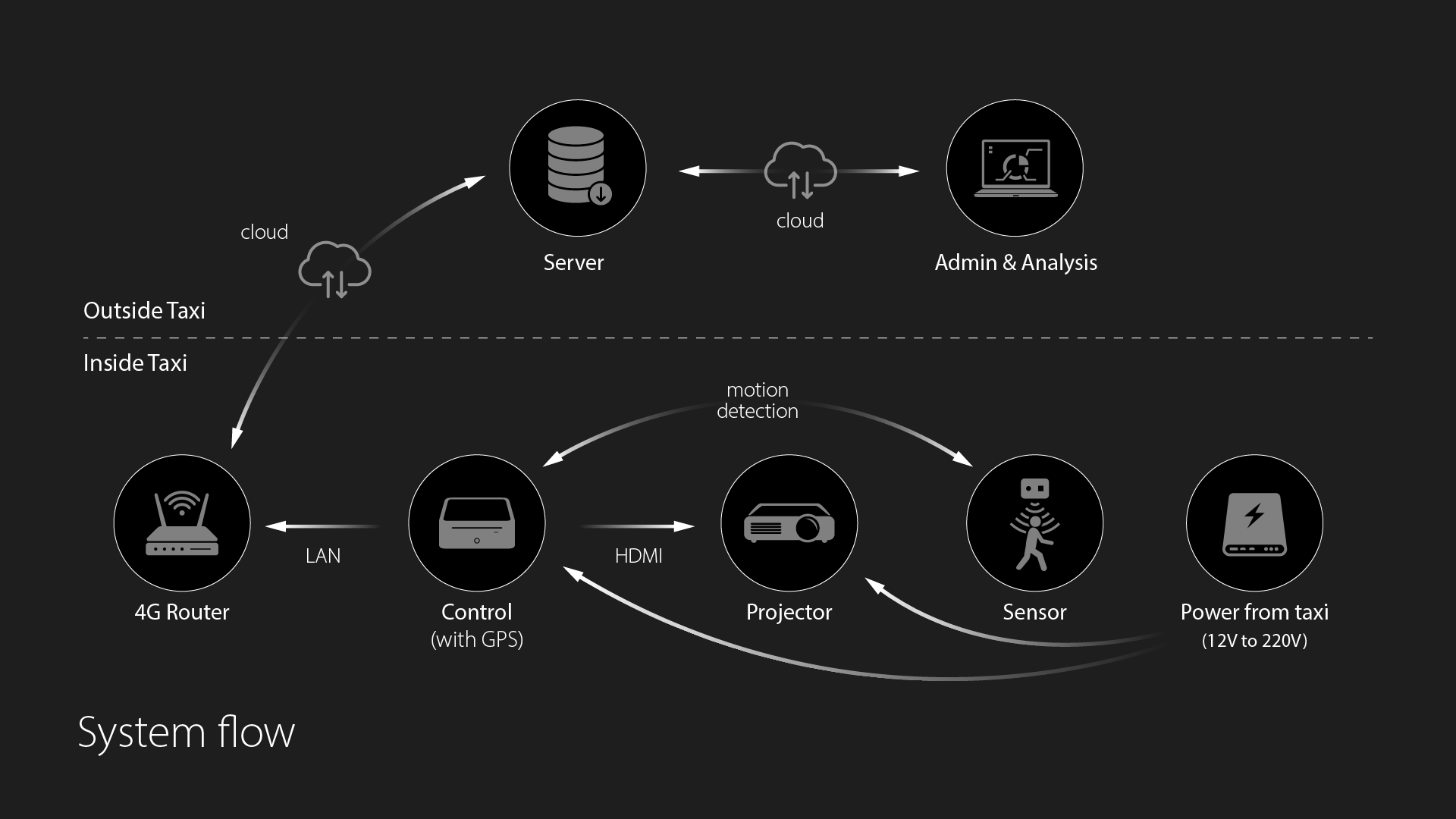
We designed and built a working vehicle prototype with a projector aimed at the passenger-side window, supported by a control unit, motion sensor, 4G router, GPS tracking, and power converted from the taxi supply. The geo-fencing system enabled content to respond to location, while the control architecture supported remote campaign management and playback reporting.
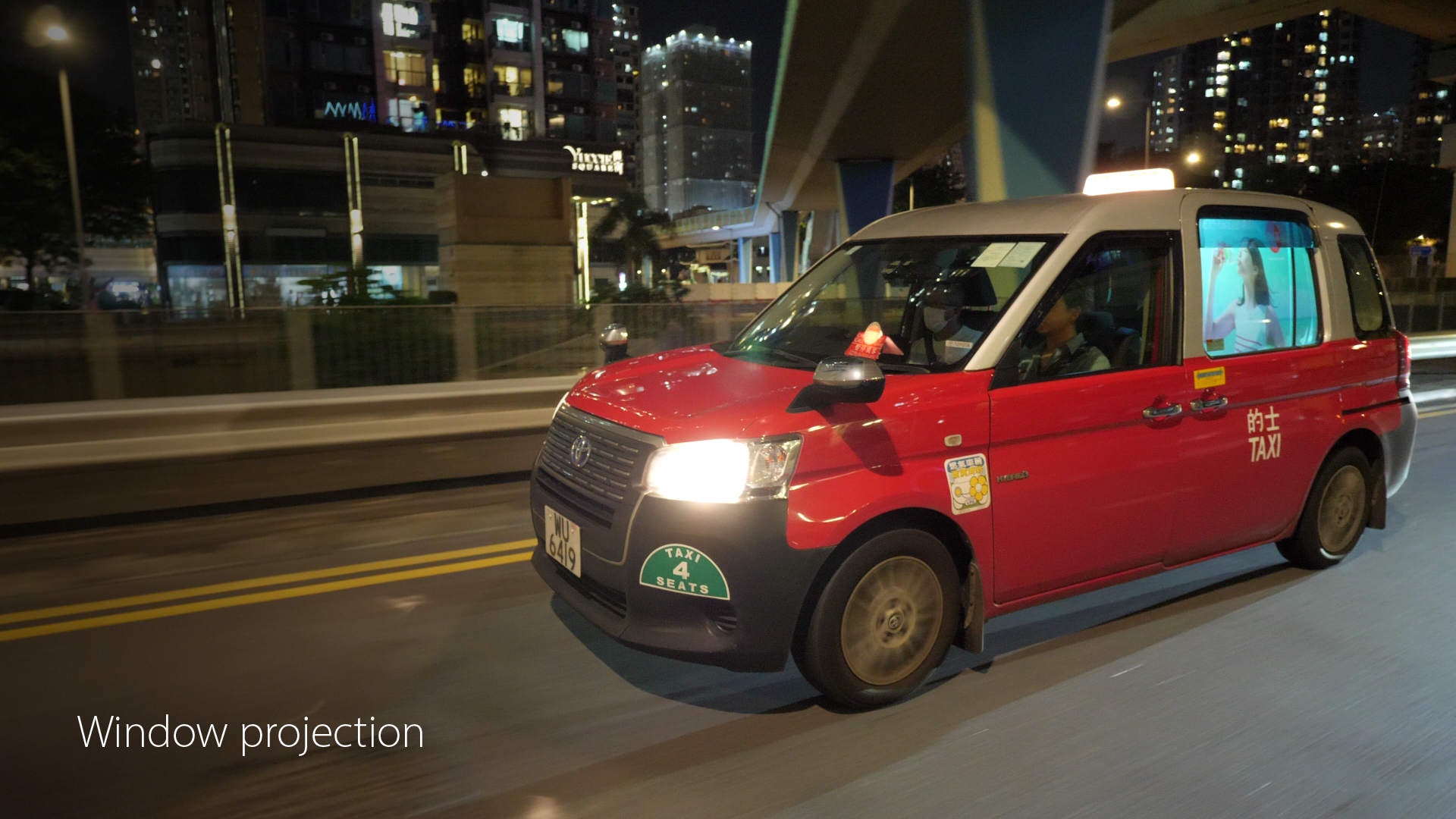
The prototype demonstrated how a taxi could become a mobile, location-responsive advertising platform without permanently covering its window. Real-road testing showed projected content operating while the vehicle was moving and provided a practical system for discussions with outdoor advertising agencies about future commercial collaboration.


